
Geothermal Heating Systems
Efficient, Long-Lasting Heating from the Ground.
Using heat taken from the ground, groundwater or geothermal sources, sustainable heating solutions can be created for homes, commercial buildings and large facilities.
Request a Quote for Your Project → Explore Ground-Source Systems →Geothermal systems make use of the ground’s temperature, which stays much more stable throughout the year.
A well-designed geothermal system offers the potential for low operating costs and highly efficient operation.
Geothermal heating systems use heat from below ground to support a building’s space heating, domestic hot water and, in some applications, cooling.
The key difference for the client is that the system is less affected by outdoor air temperature. With the right ground conditions, correctly executed drilling and correct sizing, it provides a long-lasting solution.
Which geothermal system suits which building?
The system should be chosen according to plot size, ground conditions, drilling options, the building’s heat demand, energy goals and the initial investment budget.
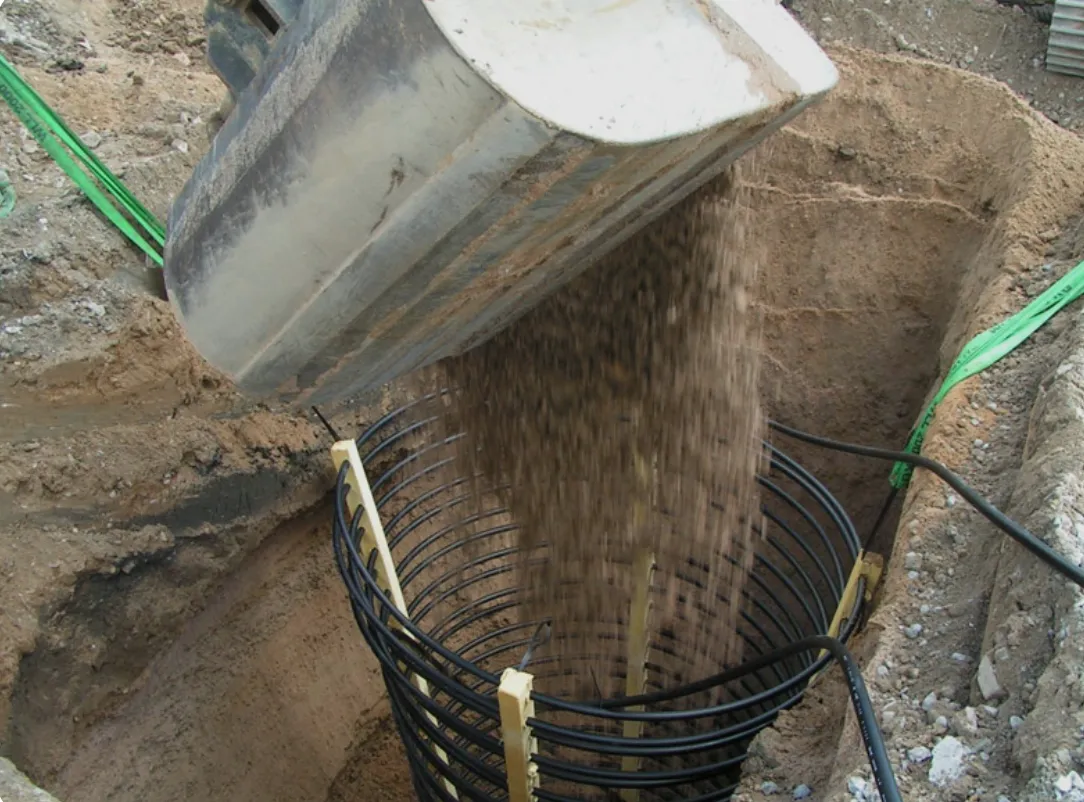
Geothermal Systems with Vertical Boreholes
In vertical borehole systems, boreholes are drilled to a specified depth and ground heat exchanger pipes are installed in them.
This is one of the most popular solutions for buildings with limited plot area. Depth, ground conditions and building capacity must be calculated correctly.
Energy consumption and operating costs
| Suitable building types | Villas, hotels, schools, office buildings, commercial buildings, projects with limited plot area |
|---|---|
| Technical advantage | Stable source temperature, high efficiency, small land requirement |
| Client benefit | Potential for low operating costs, long-lasting infrastructure, quiet operation |
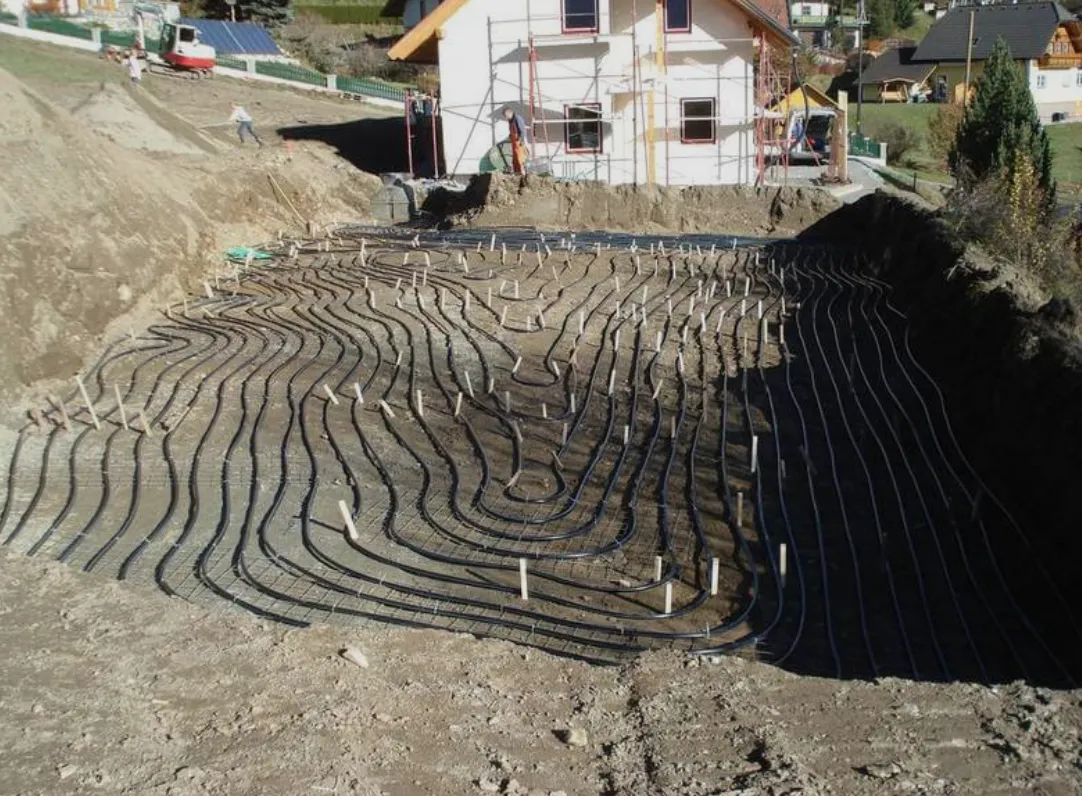
Geothermal Systems with Horizontal Collectors
In horizontal collector systems, the pipes are laid horizontally at a specified depth over a large area of land. A larger plot is used instead of drilling.
For houses, villas and rural buildings with sufficient land, this can be an economical alternative.
Energy use and land requirement
| Suitable building types | Villas, farmhouses, rural buildings, projects with large plots |
|---|---|
| Technical advantage | No drilling required, heat extraction over a large surface, compatibility with low-temperature systems |
| Client benefit | Economical solution on large plots, use of a renewable source, comfortable heating |
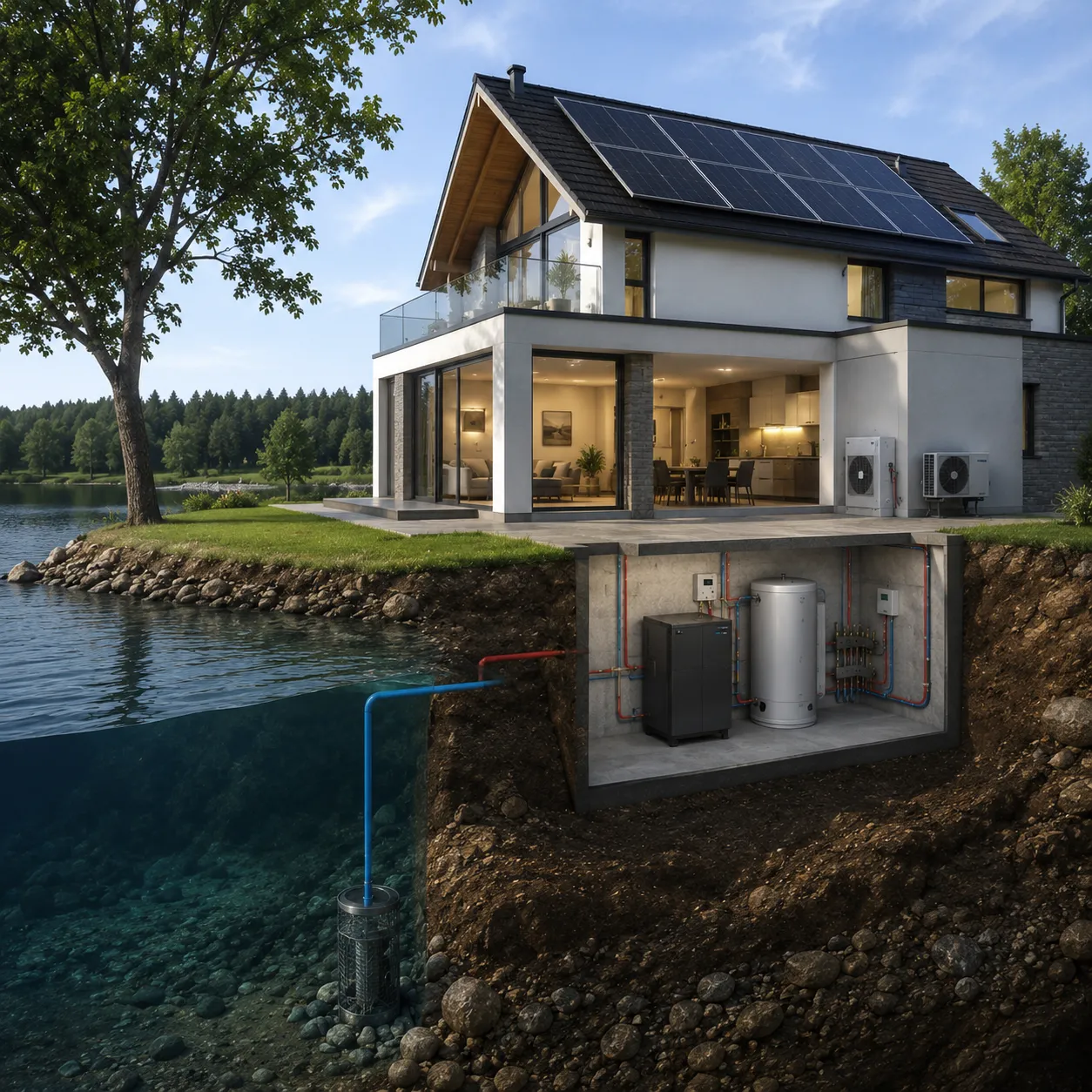
Water-source geothermal system
Water-source systems can draw energy from groundwater, ponds or similar water sources with a suitable flow rate and temperature.
The quality and flow rate of the source water and the permit process are the key factors that determine whether the system is feasible.
Energy efficiency and source control
| Suitable building types | Hotels, facilities, farms, buildings close to a water source, large residential projects |
|---|---|
| Technical advantage | High source efficiency, stable operation, heat pump integration |
| Client benefit | Potential for low energy consumption, high capacity, sustainable operation |
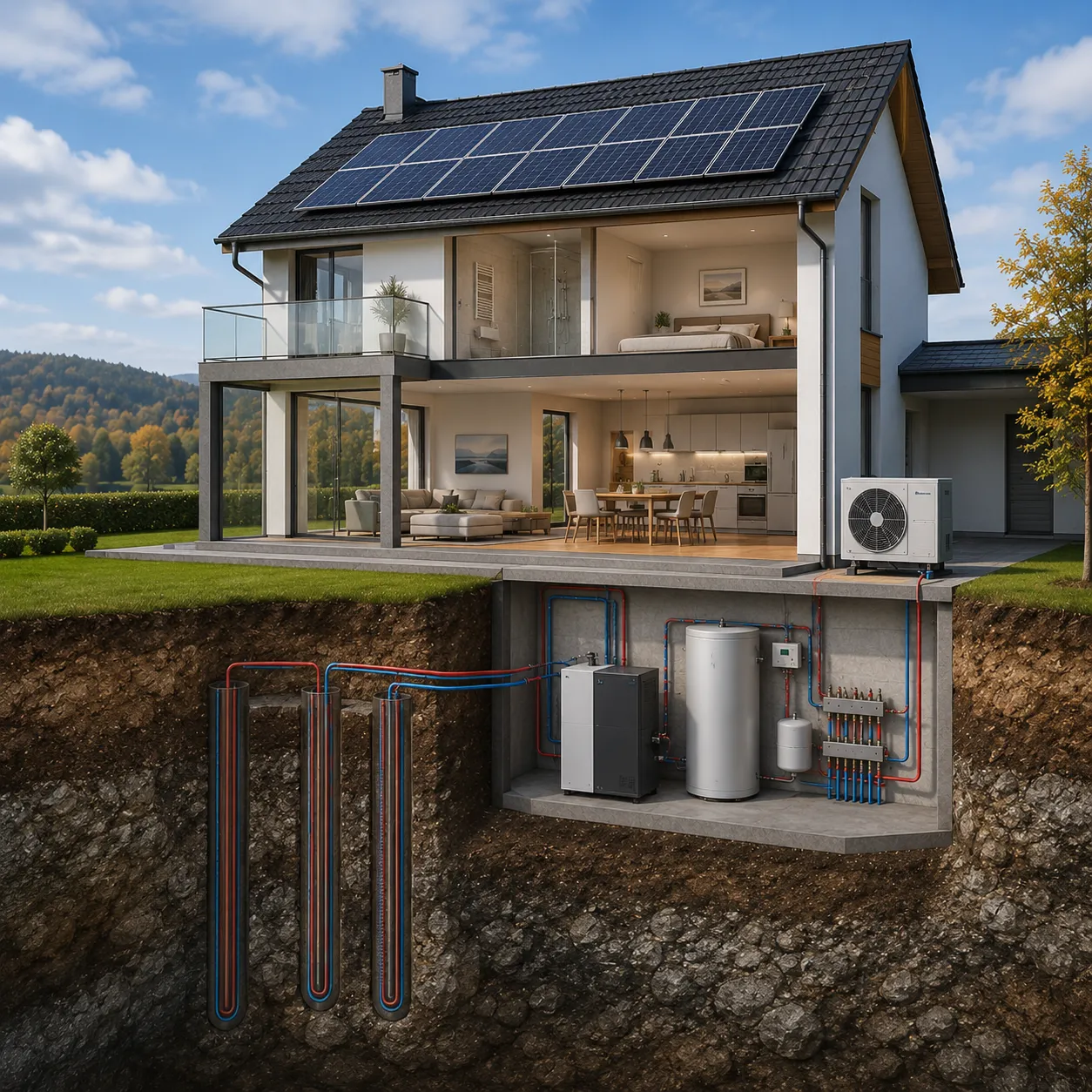
Geothermal heat pump system
A geothermal heat pump raises low-temperature energy taken from the ground to a usable temperature level. The system can work with underfloor heating, fan coils, radiators or hot water production.
The highest efficiency is usually achieved with low-temperature underfloor heating systems.
Electricity consumption and efficiency
| Suitable building types | Modern homes, villas, hotels, offices, buildings with low-temperature heating |
|---|---|
| Technical advantage | High COP potential, heating and cooling capability, automated control |
| Client benefit | Potential for low operating costs, comfortable use, renewable energy support |
What should you consider when choosing a geothermal system?
1. Ground and plot analysis is essential.
Drilling depth, soil type, groundwater conditions and plot area are the main factors that determine the type of system.
2. The initial investment can be high.
Geothermal systems require investment in infrastructure, but in the right projects they can offer long-term operating cost advantages.
3. Low-temperature installations are more efficient.
Systems that operate at low temperatures, such as underfloor heating, help geothermal heat pumps work more efficiently.
4. Good engineering ensures a long service life.
Drilling, collectors, pumps, heat exchangers, controls and capacity calculations must be planned together.
Is your site suitable for geothermal heating?
Enter details of your plot, ground conditions and building to see instantly whether vertical boreholes, a horizontal collector or a water-source system is suitable.
Let’s determine the right geothermal heating system for your building together.
We will plan the most suitable geothermal solution based on your plot size, ground conditions, the building’s heat demand and your investment goals.