Radiator and Convector Heating
Proven, Reliable and Controllable Heat Distribution.
The right capacity, the right installation and efficient operation for radiator and convector heating systems with hot water circuits in homes, offices, shops, hotels and commercial buildings.
Request a Quote for Your Project →Radiator and convector systems are widely used heat distribution solutions that run on hot water.
Water heated by a gas boiler, combi boiler, pellet boiler, oil boiler or heat pump transfers heat to the room through radiators, convectors or trench convectors.
Comfort in these systems is not determined by the number of radiators alone. Appliance capacity, pipe diameters, pump selection, hydraulic balancing, thermostatic valves, room thermostats and building insulation must all be considered together.
Radiators mainly emit heat from the wall. Convectors transfer heat to the room through natural or fan-assisted air movement. The right system should therefore be chosen according to the use of the space, the architecture and the heat source.
Which radiator or convector system suits which building?
Below, the most common hot water heat distribution systems are explained with their applications, advantages, effect on consumption and technical features.

Panel Radiator Systems
Panel radiators heat the room as hot water circulates through their metal surfaces. They are among the most widely used systems in homes.
They can work with a combi boiler, gas boiler, pellet boiler and, if designed for low temperatures, a heat pump. They are a practical solution for refurbishment in existing buildings.
Benefits and points to note
| Suitable applications | Apartments, detached houses, offices, small commercial premises |
|---|---|
| Operating temperature | Usually 45–70 °C water temperature; lower values are possible with low-temperature design |
| Advantages | Economical installation, easy maintenance, fast response |
| Disadvantages | Takes up wall space; low-temperature systems may require large radiators |
Trench Convector Systems
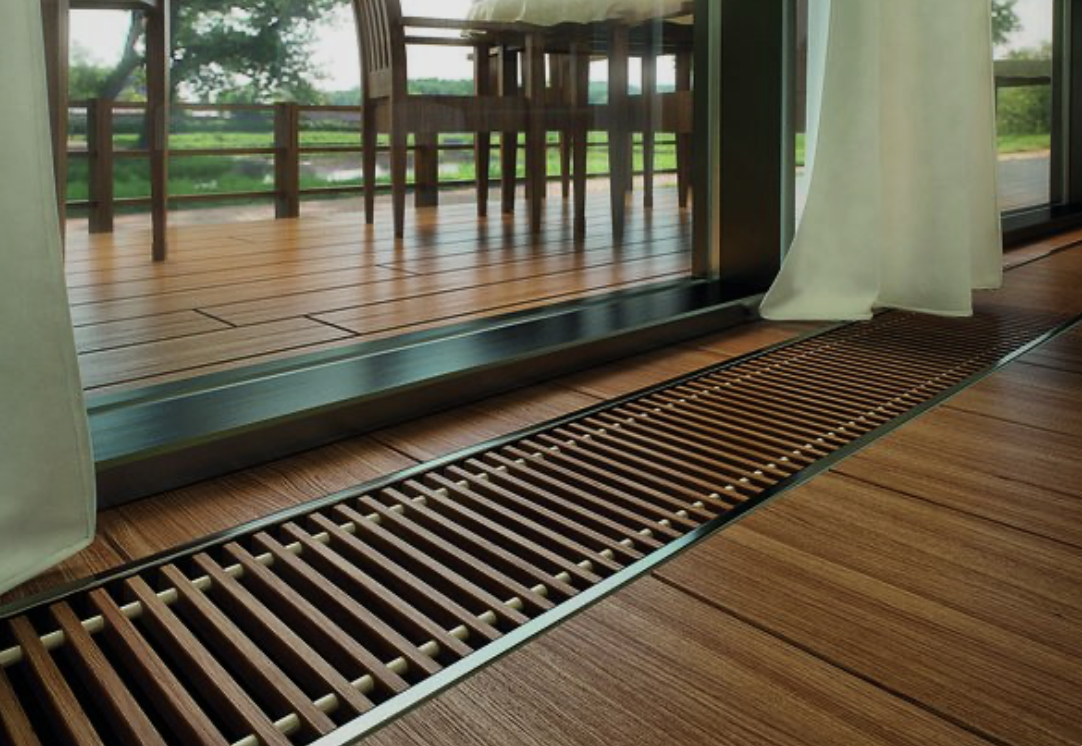
Trench convectors are used especially in rooms with large glazed façades. They are recessed into the floor and reduce the effect of cold air in front of the glazing.
They are available with natural convection or fan assistance. Fan-assisted models transfer heat faster and in some projects can also support cooling.
Benefits in use
| Suitable applications | Villas, showrooms, hotels, restaurants, offices with glazed façades |
|---|---|
| Operating temperature | Hot water circuit of 35–65 °C, depending on the project |
| Advantages | Aesthetic solution, comfort in front of glazing, strong architectural integration |
| Disadvantages | Requires a floor detail; access covers and trench cleaning are important |
Fan-Assisted Convectors
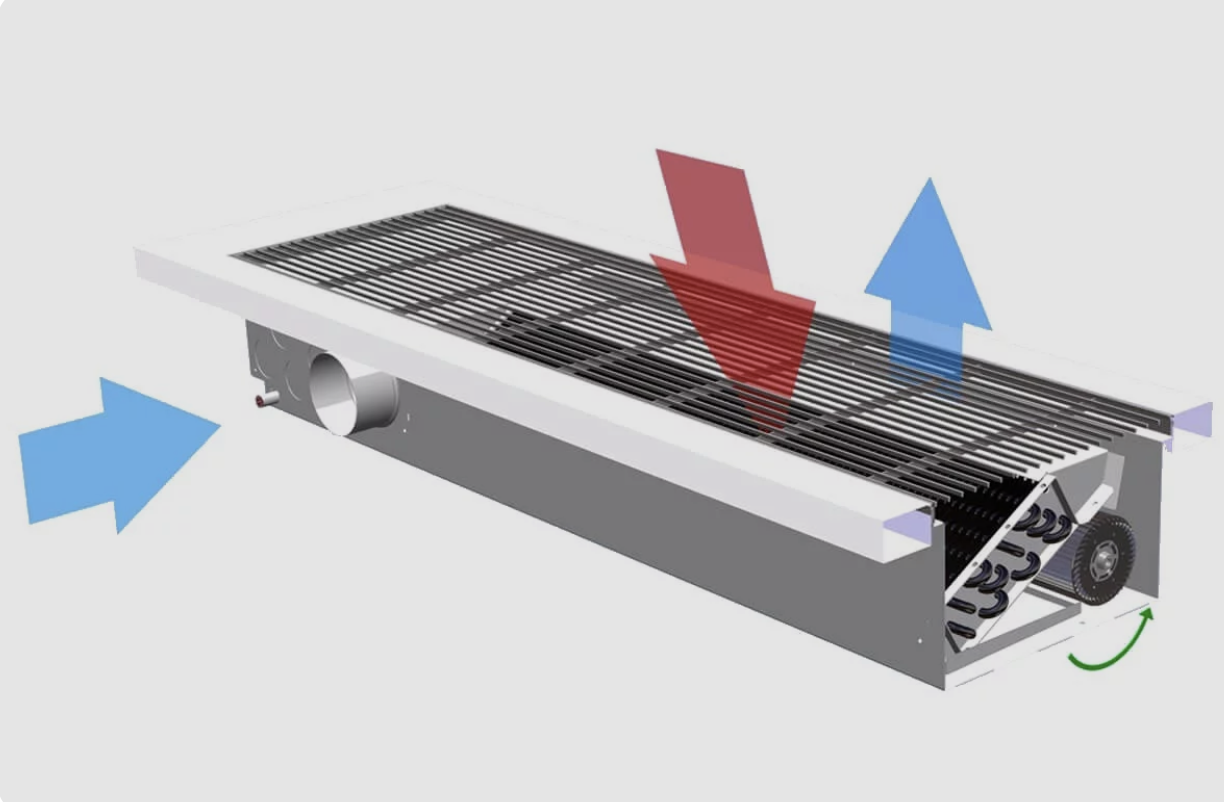
Fan convectors transfer heat to the room quickly by using a fan to pass air over a hot water coil. Some models can also be used for cooling with chilled water.
They are preferred for areas with large glazed surfaces, commercial buildings that need rapid heating and central systems.
Technical and operating features
| Suitable applications | Offices, shops, hotels, restaurants, commercial premises |
|---|---|
| Output | Options from approx. 1 to 15 kW and above, depending on the model |
| Advantages | Fast response, strong heat transfer, compact design |
| Disadvantages | Requires attention to fan noise, filter maintenance and an electrical connection |

Central Radiator and Convector Systems
In central systems, many separate areas are heated from a single boiler room or heating plant. They are common in apartment buildings, hotels and commercial buildings.
In these systems, hydraulic balancing, pump groups, the manifold arrangement, zone control and heat meters must be designed correctly.
Factors affecting energy consumption
| Suitable applications | Apartment buildings, hotels, schools, office buildings, public buildings |
|---|---|
| Controls | Zone valves, thermostatic valves, room thermostats, control panel |
| Advantages | Central maintenance, high capacity, suitability for large buildings |
| Disadvantages | Design or balancing errors can lead to consumption and comfort problems |
What should you consider when choosing a radiator or convector system?
1. Radiator size must be based on heat loss.
The floor area of the room alone is not enough. Glazing area, façade orientation, insulation, ceiling height and the age of the building all affect the capacity calculation.
2. Lower temperatures mean more efficient operation.
Appliances such as condensing boilers and heat pumps work more efficiently at low return temperatures. This is why radiators must have sufficient surface area.
3. Hydraulic balancing has a direct effect on comfort.
If the water flow in the system is not set correctly, some rooms overheat while others stay cold. Balancing matters for both comfort and consumption.
4. Convectors offer advantages in architecturally demanding spaces.
With large glazed façades, shop windows, terrace doors and modern interiors, trench convectors can be a more attractive and comfortable solution.
Let’s plan the right radiator or convector system for your building together.
We will determine the most suitable hot water heat distribution solution based on your existing heat source, room dimensions, glazed areas, insulation and usage habits.