
Fan Coil Systems
Flexible Indoor Unit Solutions for Central Heating and Cooling.
Comfortable, controllable heating and cooling distribution systems operating with hot and chilled water for hotels, offices, shops, residential developments, villas and commercial buildings.
Request a Quote for Your Project →A fan coil turns hot or chilled water from the central system into indoor comfort.
Fan coil units work together with central sources such as boilers, chillers or heat pumps. Water flowing through the internal coil transfers its energy to the room air with the help of a fan.
A fan coil system is not a standalone refrigerant-based split system like a conventional air conditioner. The main energy is generated by the central plant; the indoor units simply distribute it to the rooms.
As a result, control, maintenance and energy management in large buildings can be organised more systematically. Each room or zone can be controlled by its own thermostat.
Correct capacity, pipework, condensate drainage, noise level, controls and hydraulic balancing are critical to system performance.
Which type of fan coil suits which building?
A fan coil should be selected according to the architecture, ceiling height, acoustic requirements, service access, heating and cooling capacity and intended use.
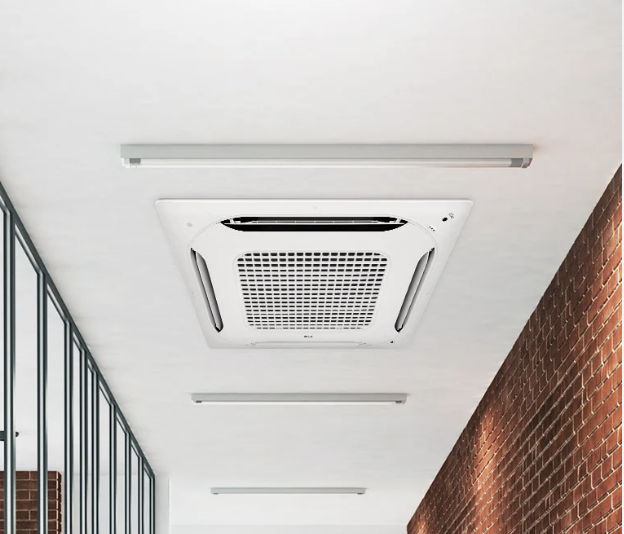
Cassette Fan Coil
Cassette fan coil units are installed in a suspended ceiling and usually distribute air in four directions. They provide balanced air distribution in offices, shops, hotel lobbies, restaurants and open-plan commercial spaces.
They are one of the most popular solutions when a neat appearance and even air distribution over a large area are required.
Pros and points to consider
| Suitable buildings | Offices, shops, restaurants, hotel lobbies, showrooms, open-plan commercial spaces |
|---|---|
| Capacity range | Approx. 2–12 kW cooling / 3–14 kW heating |
| Consumption | Electricity is consumed only by the fan motor and controls; the main energy consumption takes place in the chiller, boiler or heat pump. |
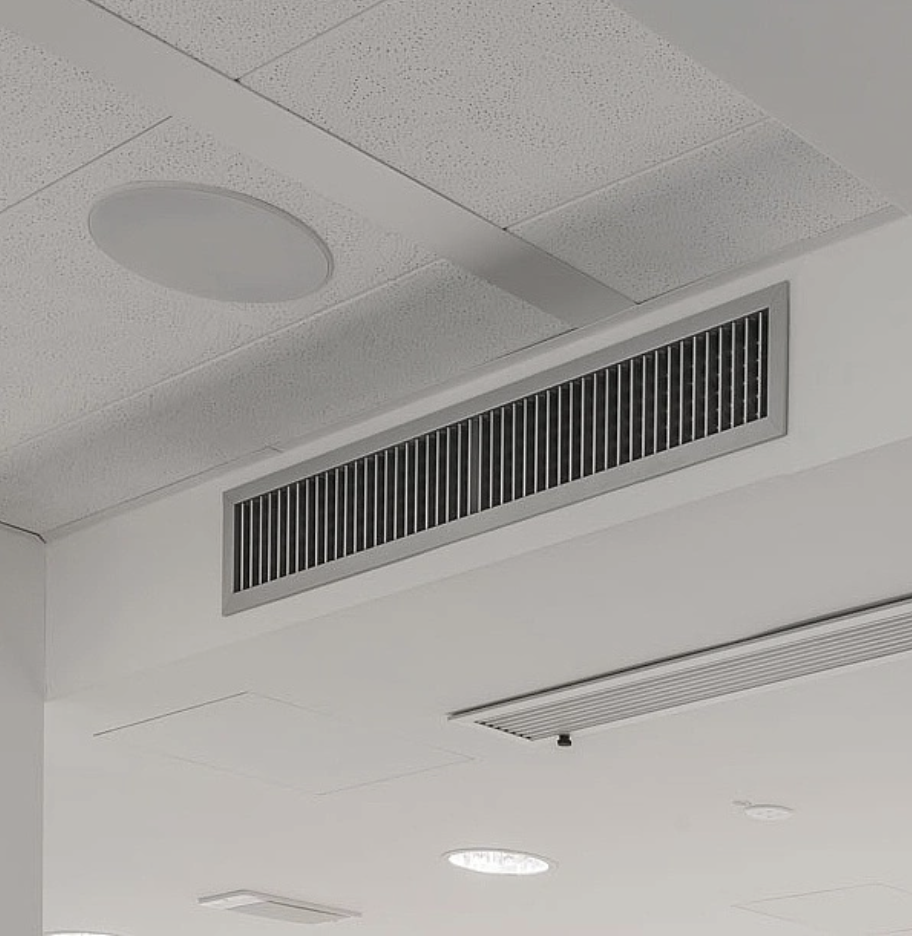
Ducted Fan Coil
Ducted fan coil units are concealed in the ceiling void, and air is supplied to the room through grilles. They are used in luxury homes, hotel rooms, villas, offices and spaces where appearance matters.
The unit is invisible; only the grilles can be seen. This makes it one of the cleanest solutions from an interior design perspective.
Pros and points to consider
| Suitable buildings | Villas, hotel rooms, residential developments, offices, meeting rooms, bespoke commercial spaces |
|---|---|
| Capacity range | Approx. 2–20 kW cooling / 3–24 kW heating |
| Consumption | Fan power depends on unit size and duct resistance; a well-designed low-pressure ductwork system reduces consumption. |
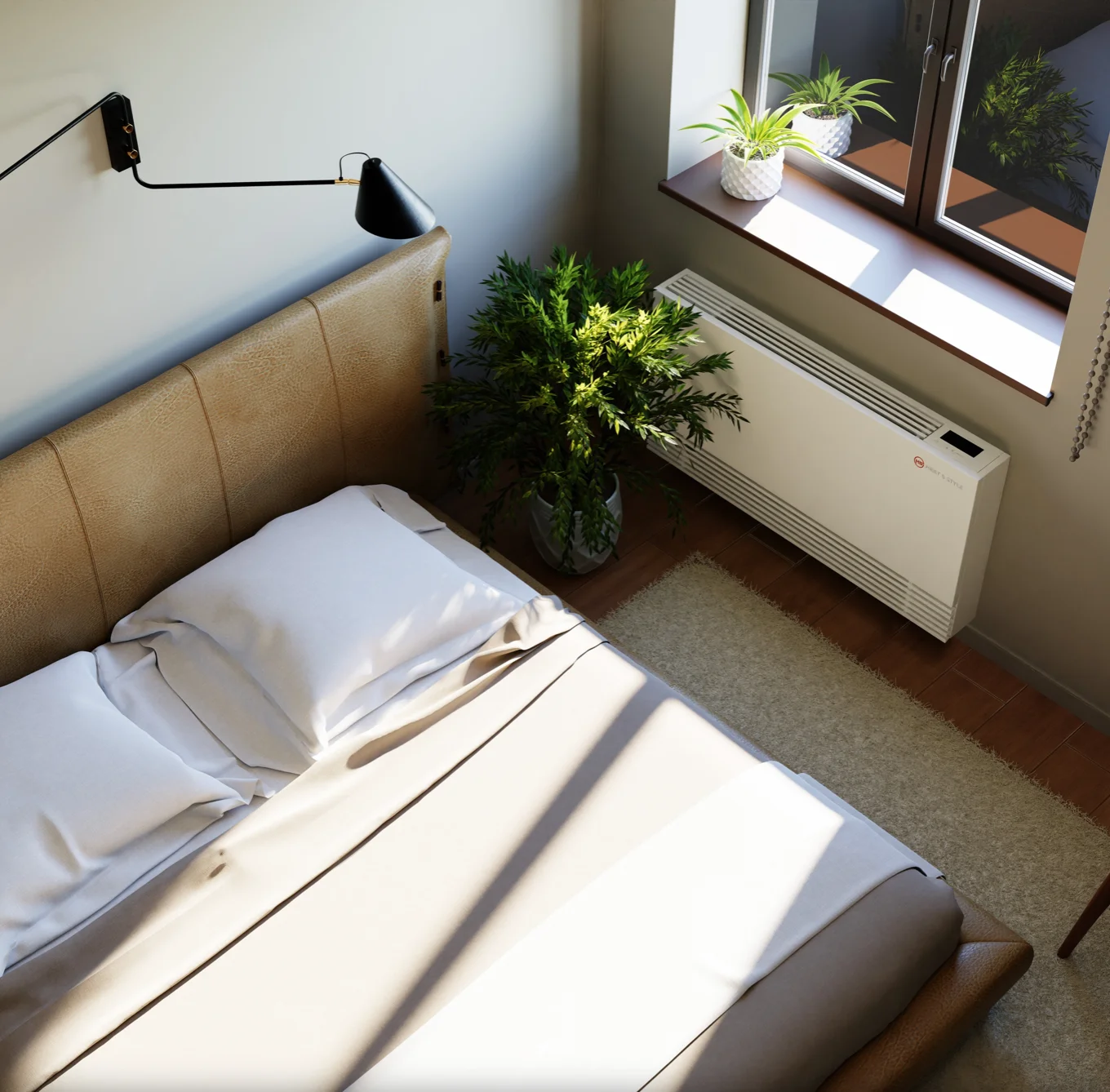
Wall-Mounted Fan Coil
A wall-mounted fan coil looks like the indoor unit of a split air conditioner, but operates with hot or chilled water instead of refrigerant. It is a practical solution for spaces without a suspended ceiling.
It is easy to install in small offices, rooms, plant rooms and self-contained areas.
Pros and points to consider
| Suitable buildings | Apartments, small offices, hotel rooms, plant rooms, back-of-house areas in shops |
|---|---|
| Capacity range | Approx. 1.5–7 kW cooling / 2–9 kW heating |
| Consumption | Low fan consumption; the efficiency of the central plant determines the total energy cost. |

Floor-Mounted / Console Fan Coil
Floor-mounted fan coil units are used below windows, in areas with glazed façades or where wall mounting is unsuitable. They support comfort along façades with high heat loss.
They are a good choice particularly for hotel rooms, offices, commercial spaces with glazed façades and renovation projects.
Pros and points to consider
| Suitable buildings | Hotels, offices, spaces with glazed façades, villas, renovation projects |
|---|---|
| Capacity range | Approx. 1.5–10 kW cooling / 2–12 kW heating |
| Consumption | Runs quietly and economically at a low fan speed; capacity depends on the water temperature. |

2-Pipe and 4-Pipe Fan Coil Systems
In a 2-pipe system, hot or chilled water circulates through the same circuit depending on the season. In a 4-pipe system, the hot and chilled water circuits are separate, so some zones of the same building can be heated while others are cooled.
In hotels, offices and mixed-use buildings, a 4-pipe system delivers greater comfort, while a 2-pipe system requires a lower initial investment.
System selection
| 2-pipe system | Lower initial investment, simpler control, one operating mode at a time |
|---|---|
| 4-pipe system | Higher initial investment, better comfort, simultaneous heating and cooling possible |
| Suitable buildings | Hotels, offices, residential developments, hospitals, commercial buildings with mixed façade orientations |
What should you consider when choosing a fan coil system?
1. The main energy source must be selected correctly.
A fan coil does not generate energy on its own. The capacity of the chiller, heat pump, boiler or central system must be calculated correctly.
2. Noise level has a direct impact on comfort.
In hotel rooms, bedrooms and offices, a quiet unit, the right fan speed and correct duct design are essential.
3. Condensate drainage and maintenance access must not be overlooked.
Condensate forms during cooling. The drain line, trap, fall and service hatch must be executed correctly.
4. Hydraulic balancing is essential.
If each unit does not receive the correct water flow, some rooms will heat well while performance drops in others.
Let’s plan the right fan coil system for your building together.
We will determine the most suitable fan coil solution based on the project type, intended use, central energy source, ceiling construction and your comfort expectations.